Modular Configuration
Build complex, rule-safe modular products with snapping, constraints, and smart variants — all inside an interactive 3D workspace.
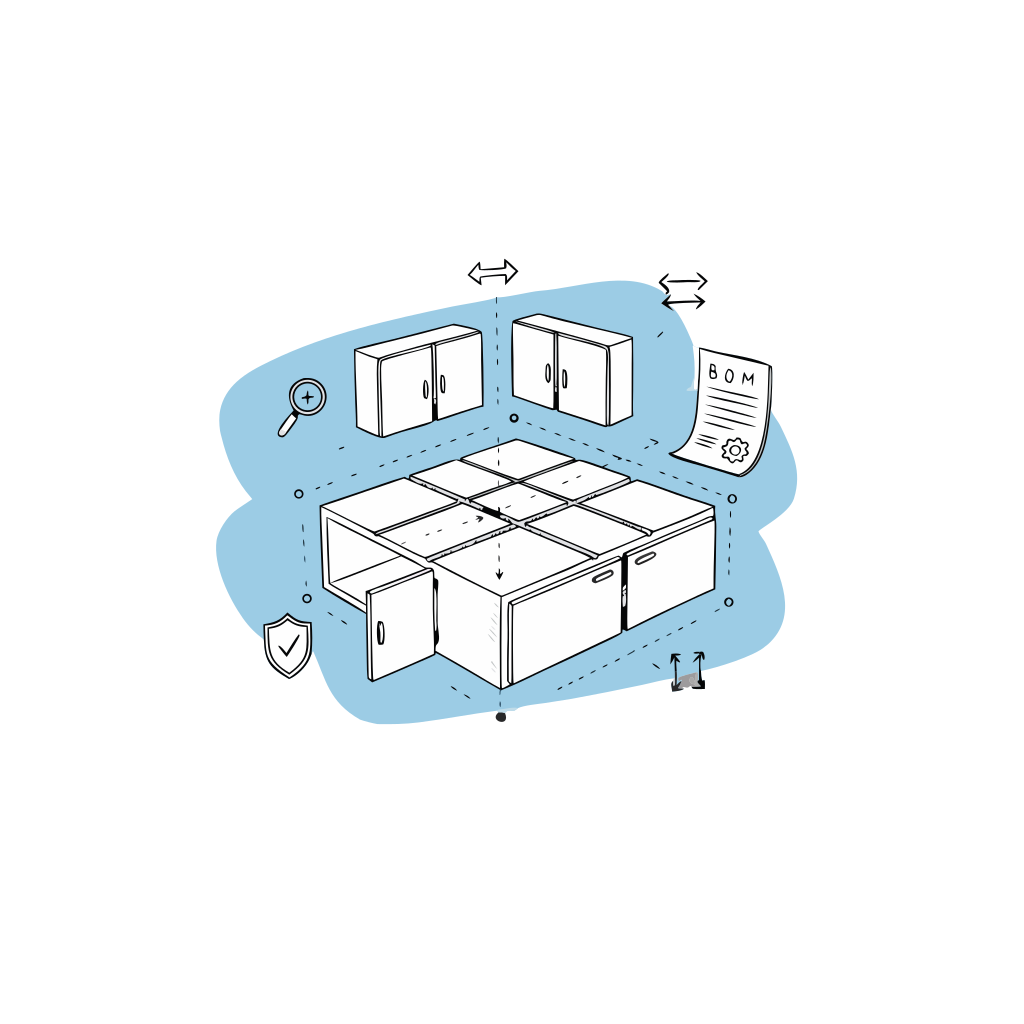
Overview
Author modules, connectors, and constraints once — then let customers assemble valid combinations visually in 3D. Konfigear enforces parametric rules, collision boundaries, and compatibility so every layout is manufacturable by design. Perfect for cabinetry, storage systems, and ETO assemblies that demand accuracy and speed.
Modular configuration is for products assembled from repeating parts, connectors, and constraints. Buyers build layouts visually while rules protect manufacturability, spacing, and compatibility. It is a natural fit for cabinetry, workstations, storage systems, and other ETO assemblies that cannot be sold as flat variant lists.
Key Benefits
Shorter decision cycles and fewer configuration errors at scale.
- Snap-to-fit with constraints and anchors
- Parametric dimensions and auto-scaling
- Live BoM updates as modules change
How It Works
- 1
Author modules once
Define modules, connectors, and constraints that represent how products physically assemble.
- 2
Snap in 3D
Buyers assemble valid layouts visually with snapping and collision-aware placement.
- 3
Enforce manufacturability
Parametric rules keep every layout within what production can actually build.
- 4
Export the final layout
Hand sales and manufacturing a complete modular configuration with dimensions and parts.
Use Cases
- Cabinetry and storage systems with repeating modules.
- Workstations and industrial furniture with configurable bays.
- ETO assemblies that need visual accuracy before quoting.
- Retail fixture programs sold through dealers and architects.
Who It’s For
Ideal for furniture, cabinetry, kiosks, racking, and ETO products.
- No-code rule authoring UI
- CAD/GLTF-compatible content pipeline
- Room and floor-plan planning ready
Frequently Asked Questions
- Can modular rules prevent collisions?
- Yes. Constraints and boundaries help keep assemblies valid as modules are added or moved.
- Is this only for furniture?
- Furniture is a common fit, but any modular, rule-driven product family can use the same approach.
- Does modular configuration update pricing?
- Added modules and variants can feed live CPQ pricing as the layout changes.
Related Platform
Explore how this feature works inside our platform for deeper context and implementation details.
View Platform