

Product Customizer: What It Is and When You Need Configurator Software
A product customizer lets shoppers personalize a product before they buy—colors, materials, text, artwork, or modular options—while seeing the result in real time. For ecommerce brands, the right online product customizer turns a static catalog into an interactive buying experience that lifts conversion and reduces “not what I expected” returns.
This guide covers what a product customizer is, how it differs from product configurator software, the types of customization software teams use, and how to choose ecommerce product customization software that scales beyond mockups.
What is a product customizer?
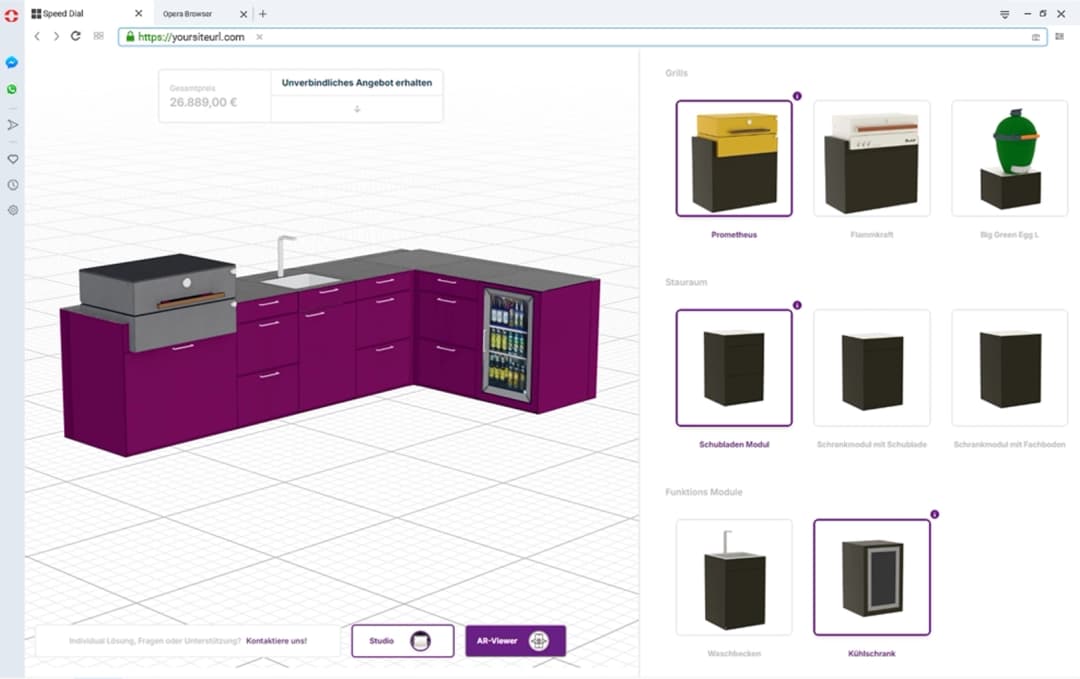
A product customizer (sometimes called product personalization software or a customization platform) is software that lets customers modify a product visually or structurally before purchase. Typical inputs include:
- Colors, finishes, and materials
- Engraving, embroidery, or print artwork
- Size, dimensions, and modular add-ons
- Accessories bundled into a complete build
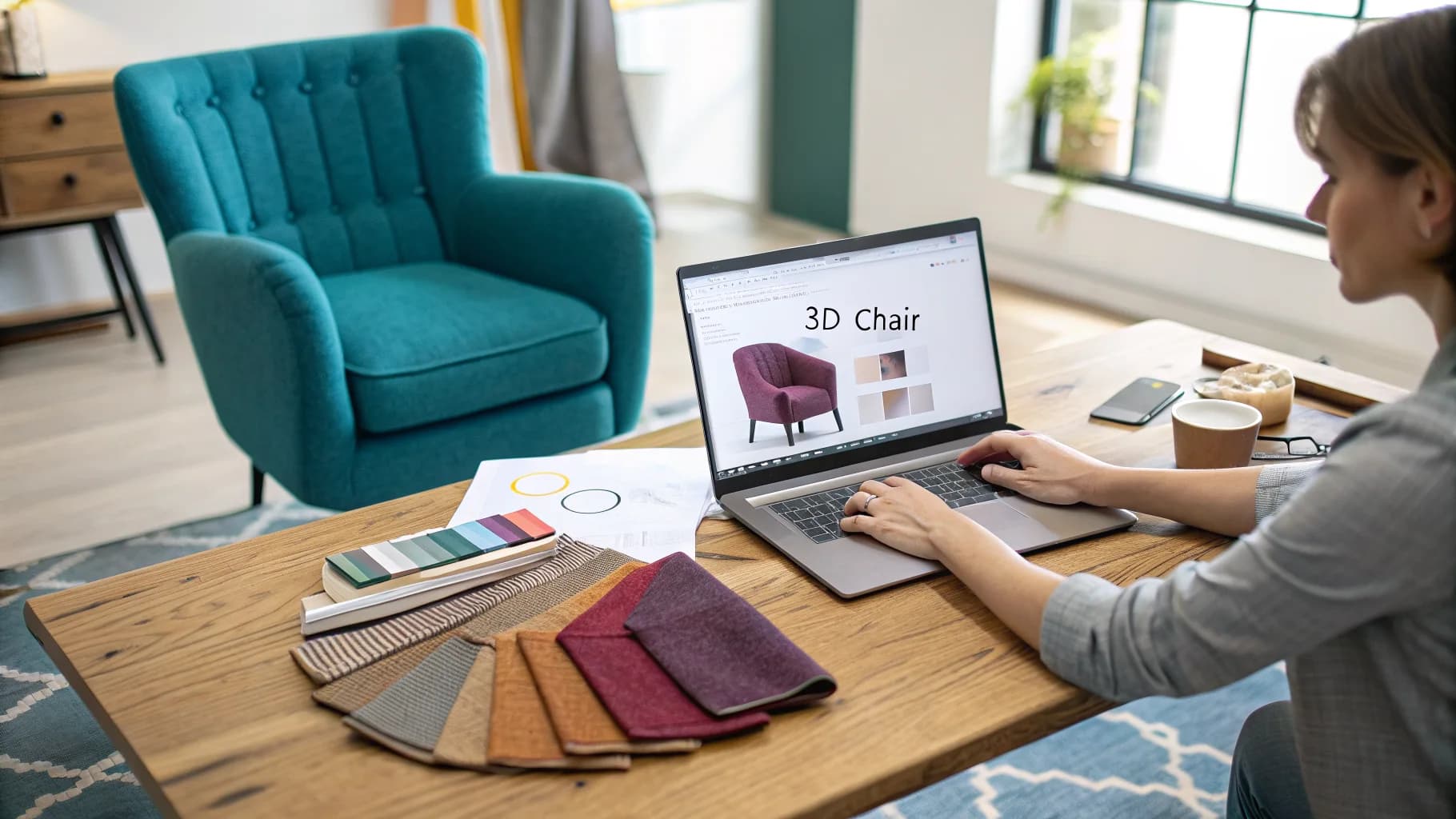
An online product customizer usually embeds on a product page or runs as a storefront app. Shoppers explore options, preview the result, and add a personalized item to cart—or request a quote when pricing is complex.
If your catalog also needs manufacturable rules and accurate quoting, you are moving from a simple customizer into product configurator software.
Product customizer vs product configurator
These terms are often used interchangeably, but the emphasis differs:
| Term | Best for | Typical strength |
|---|---|---|
| Product customizer | Visual personalization and ecommerce mockups | Fast previews for colors, text, and artwork |
| Product configurator | Valid combinations and complete builds | Rules, compatibility, BOM-ready options |
| CPQ / sales configurator | B2B quoting and dealer sales | Pricing, approvals, CRM/ERP handoff |
A custom product configurator is the right label when options depend on each other—for example, a frame that only supports certain tops, or an industrial SKU with constrained accessories. A visual product customizer alone may look great and still allow invalid or unmanufacturable orders.
For a deeper definition, see what is a product configurator. For B2B quoting workflows, see sales configurator.
Why product customization matters in ecommerce
Shoppers expect personalization. Brands that offer ecommerce product customization software typically see:
- Higher engagement — customers spend more time exploring options than browsing static photos
- Higher conversion — confidence rises when buyers see “their” product before checkout
- Higher average order value — premium finishes and accessories surface naturally during configuration
- Fewer returns — visualization and clear specifications reduce surprises after delivery
- Cleaner operations — structured option data beats free-text order notes
Customization software is especially valuable for furniture, apparel, jewelry, kitchen and bath, and made-to-order manufacturing—anywhere photos cannot show every valid combination.
Types of customization software

Online product customizers
Browser-based tools that focus on visual personalization. Common for print-on-demand, simple apparel, and consumer goods where the main job is previewing art or color.
Product personalization software
Often emphasizes name, text, monograms, and artwork placement. Strong for gifts and branded merchandise; weaker when your catalog has deep modular logic.
Custom product configurators
Rules-based systems that validate combinations, update pricing live, and can connect to production. This is where product customizer software becomes a full selling system—not just a mockup generator.
Hybrid platforms
Modern product customizer software like Konfigear combines visual customization, configurator rules, 3D visualization, guided selling, and CPQ so ecommerce and manufacturing stay aligned.
Benefits of using product customization software
For customers
- Interactive control over the final product
- Clear pricing as options change
- Confidence from 3D or photoreal previews
For your business
- Fewer invalid orders and remakes
- Faster quoting for complex SKUs
- Better data for demand and popular option mixes
- Scalable personalization without proportional headcount growth
When teams outgrow basic customizer apps, they usually need product configurator software that encodes real product logic.
Features checklist for ecommerce product customization software
Before you buy, confirm the platform can support:
- Option rules — hide or block incompatible choices
- Live pricing — totals update with every valid change
- Visualization — 2D/3D previews that match production reality
- Storefront fit — Shopify, WooCommerce, Magento, or headless embed
- Order handoff — cart line items, quotes, CRM/ERP, or production files
- Mobile experience — full customization in the browser without an app install
- Catalog maintenance — non-developers can update options and media
Compare vendors with our buyer guide: choosing the best product configurator software.
Steps to integrate a product customizer
- Pick a pilot product family with clear commercial impact and manageable option depth.
- Map options and constraints — materials, sizes, modules, and what must never combine.
- Prepare media — high-quality images or 3D assets for every finish and module.
- Connect commerce — embed on the product page and sync configured carts.
- Train sales and support — so teams can assist customers and dealers in the same tool.
- Measure and expand — track conversion, AOV, returns, and quote cycle time, then roll out more SKUs.
How to choose the right ecommerce product customization software
Ask vendors to show your real catalog—not a generic demo. Prioritize:
- Manufacturable rules over flashy mockups alone
- Accurate price calculation for your commercial model
- Clear path from configuration to production
- Integration with the platforms you already run (Shopify, WooCommerce, Magento, and more)
- Support for both D2C storefronts and B2B quoting if you sell both ways
If you mainly need artwork placement for simple POD products, a lightweight customizer app may be enough. If you sell modular or engineered products, choose a custom product configurator with CPQ depth.
When you need Konfigear-level configurator and CPQ
Choose a full product configurator platform when:
- Options create thousands of combinations
- Invalid builds create remakes or engineering rework
- Sales still quotes from spreadsheets
- You need 3D or AR for spatial products
- Configured orders must reach ERP or manufacturing systems cleanly
Konfigear is product configurator software built for those realities: rules, interactive 3D, guided selling, live pricing, and ecommerce/ERP sync in one stack.
Next steps
- Explore product configurator software
- See the 3D product configurator
- Learn what is a product configurator
- Request a demo on your product line