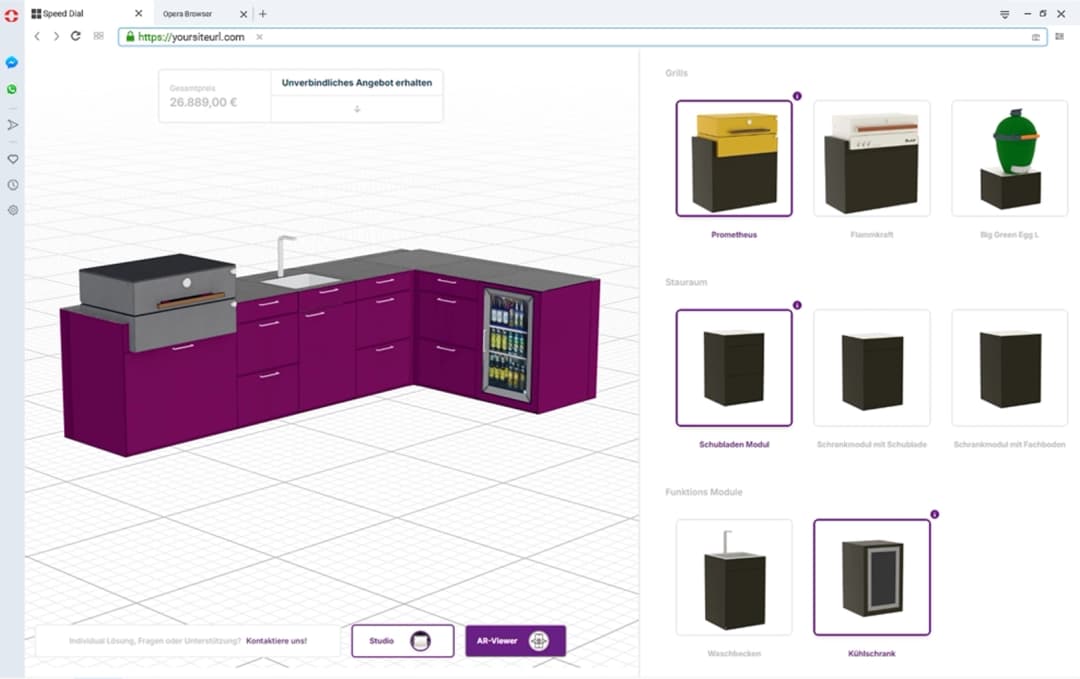



Sales Configurator: Benefits for Faster, More Accurate Selling
A sales configurator helps sales teams and dealers build valid product configurations, calculate prices in real time, and generate accurate quotes—without spreadsheets or tribal knowledge. For manufacturers and complex ecommerce catalogs, it is one of the fastest ways to shorten the sales cycle and reduce costly order errors.
This guide explains what a sales configurator is, how it works, the benefits for sales management, and how it connects to CPQ software, guided selling, and product configurator software.
What is a sales configurator?
A sales configurator is software that guides sellers through product customization and pricing. Instead of emailing engineering or rebuilding quotes by hand, the team selects options inside a structured flow. Rules keep every combination valid. Pricing updates as the configuration changes. The output is a complete, sellable build—often with a branded quote ready for the customer.
Key capabilities usually include:
- Automated product configuration with constraint rules
- Real-time pricing and discount logic
- Quote generation for customers and dealers
- Integration with CRM, ERP, and ecommerce systems
A sales configurator is closely related to CPQ (configure, price, quote). Many teams use the terms together: the configurator handles valid builds; CPQ handles commercial workflows and documentation.
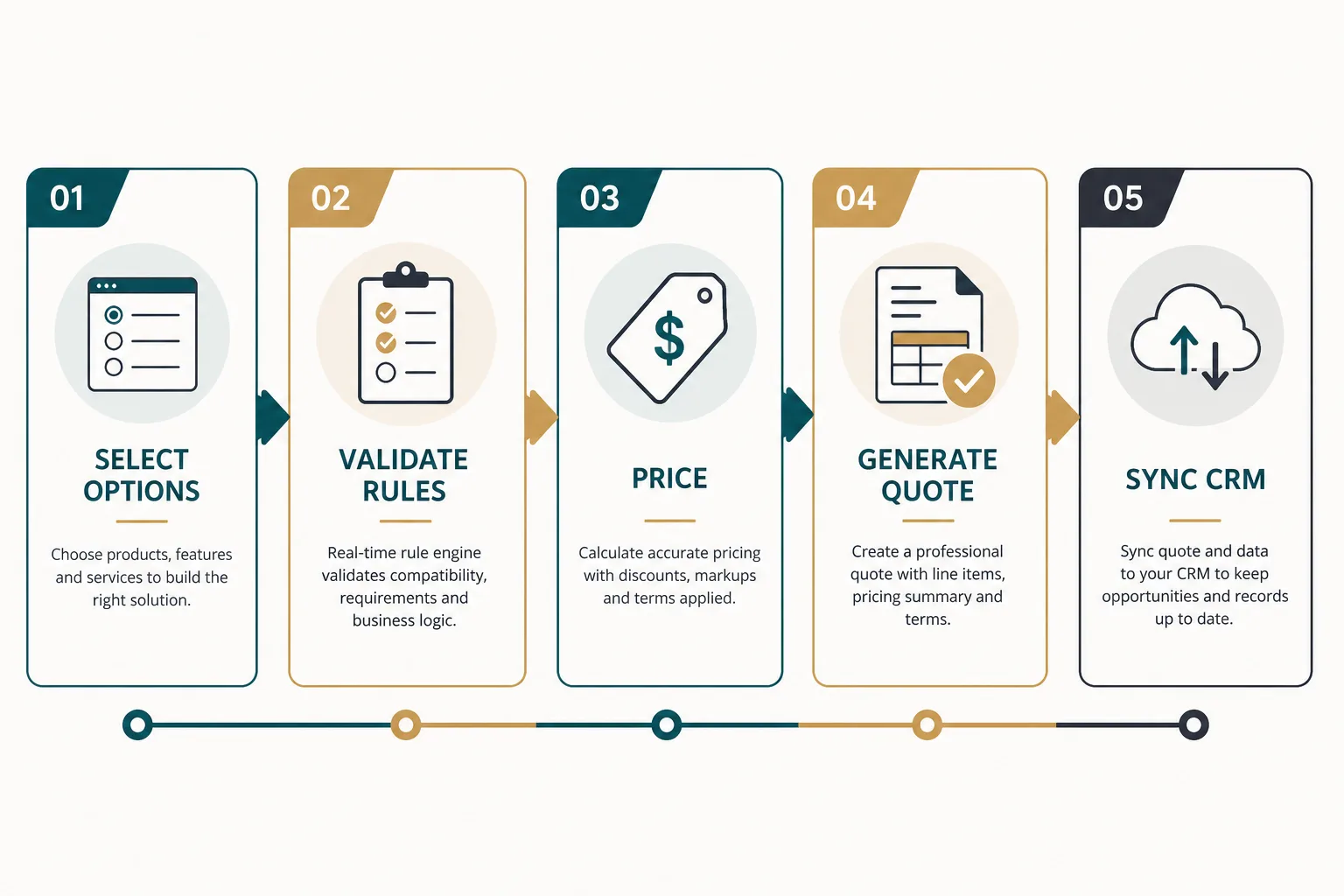
How sales configurators work
- Select a base product — Start from a catalog item or product family.
- Apply options — Materials, modules, sizes, accessories, and services.
- Validate rules — Incompatible choices are blocked or replaced automatically.
- Calculate price — Totals update with quantities, discounts, and commercial rules.
- Generate a quote — Export a proposal or push the deal into CRM.
- Handoff to fulfillment — Sync configuration and BOM data to ERP or production.
When visualization matters, pair the sales configurator with a 3D product configurator so buyers see the exact build while pricing stays exact.
Key benefits for sales management
Faster quote generation
Sales cycles shrink when quotes take minutes instead of hours. Teams respond while buyer interest is high and spend less time on admin.
Fewer configuration and pricing errors
Rules and live price calculation reduce invalid option mixes and margin mistakes. Order accuracy improves before production ever starts.
Consistent selling across teams and regions
A shared sales configurator—and configurable sales platform logic—keeps dealers, inside sales, and field teams quoting the same way.
Better visibility for managers
Analytics on quote volume, win rates, popular options, and discount patterns help leaders coach teams and forecast demand.
Less product training overhead
New sellers climb the learning curve faster when the tool encodes product knowledge that used to live in binder manuals and tribal chat threads.
Improving customer experience
Customers benefit when configuration is interactive and transparent:
- Real-time product visualization
- Clear specifications for every option
- Accurate pricing before commitment
- Fewer post-sale surprises and change orders
Whether the buyer configures themselves online or works with a salesperson, the experience feels guided instead of chaotic. That is especially powerful for high-consideration purchases in manufacturing, furniture, kitchen and bath, and industrial equipment.
Integration with sales software and other tools
A sales configurator delivers the most value when it connects to the rest of the stack:
- CRM — Attach quotes and configurations to opportunities
- ERP — Push BOM and order data for clean fulfillment
- Ecommerce — Keep D2C and B2B selling on the same product logic
- CPQ workflows — Approvals, discount thresholds, and branded documents
Konfigear connects configuration, visualization, and quoting so sales, marketing, and operations share one source of product truth. Explore CPQ software and product configurator software for the full platform view.
Industry applications
Sales configurators adapt across models:
- Manufacturing — Complex machines, modular systems, and dealer portals
- Furniture and interiors — Materials, dimensions, and modular assemblies
- Building materials — Spec-driven products with compatibility constraints
- Custom equipment — Accessories and options that change price and lead time
- Retail and ecommerce — Self-serve configuration with optional sales assist
If your catalog is visually complex, combine the sales configurator with guided selling so buyers answer needs-based questions before diving into every attribute.
Sales configurator vs product customizer
A product customizer often emphasizes visual personalization for ecommerce. A sales configurator emphasizes valid commercial outcomes for sellers—accurate price, quote, and handoff. Many organizations need both: shoppers customize online, while sales teams use the same rules engine for complex deals.
How to get started
- Map your most quoted product family and the rules that cause rework today.
- Define pricing logic that must stay consistent across channels.
- Choose whether buyers self-serve, sellers configure, or both.
- Integrate CRM/ERP early so quotes do not become dead-end PDFs.
- Measure quote cycle time, error rate, and win rate after launch.
Next steps
- Evaluate product configurator software
- Explore CPQ software for manufacturers
- Read what is a product configurator
- Request a demo to see Konfigear on your sales process